Top Skincare Trends in 2026 You Need to Try
Skincare in 2026 is more than just cleansing, moisturizing, and occasional pampering — it’s now a holistic, science-driven journey toward long-term skin health and resilience. Today’s consumers are more informed and intentional about what they use, why they use it, and how those products interact with their unique biology. The industry’s biggest trends are a response to this shift, blending technology, personalization, gentle formulations, and barrier-supportive care into everyday routines.
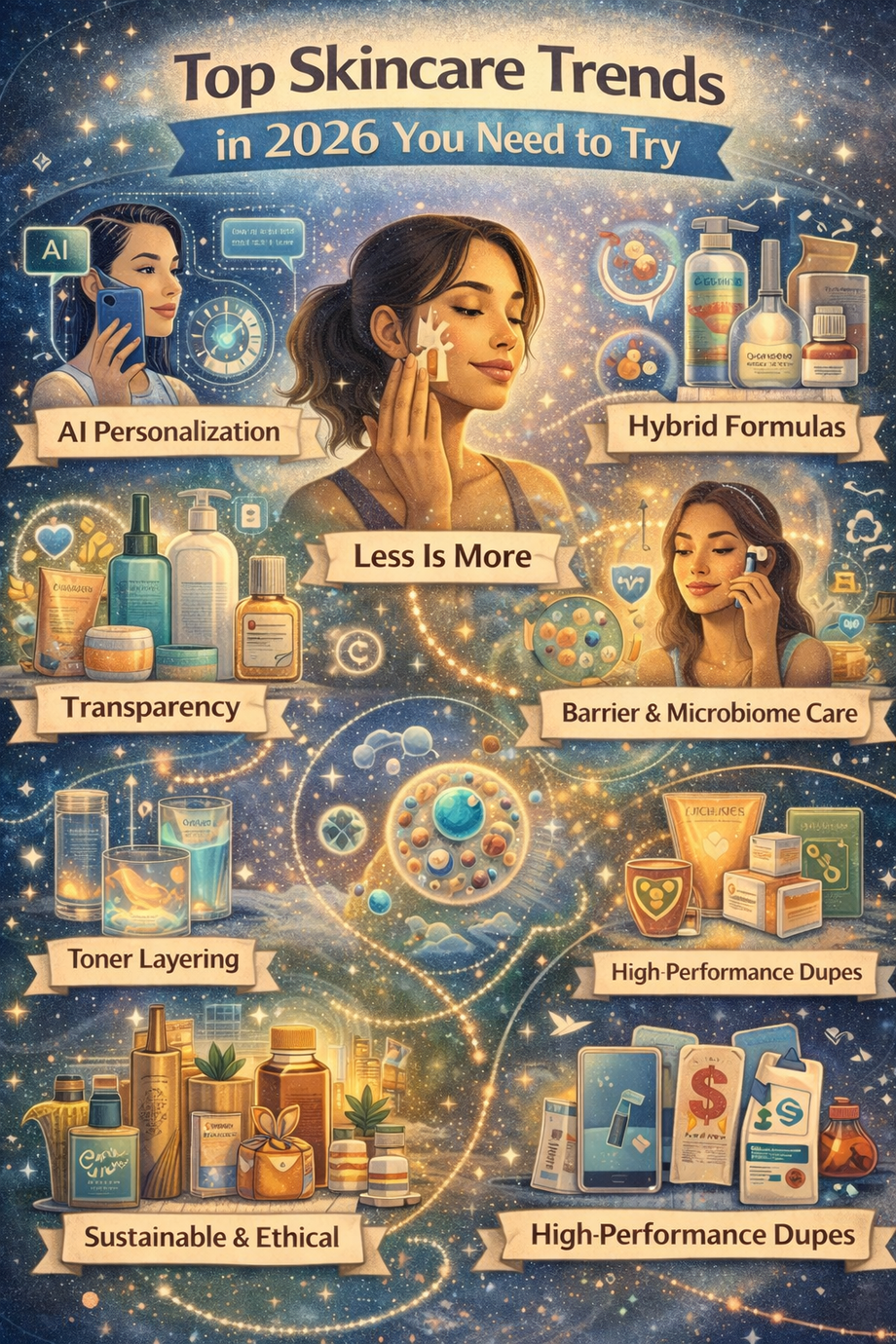
In 2026, skincare isn’t just about addressing visible concerns; it’s about understanding how your skin works, what it needs at the cellular level, and how to support it sustainably over time. Below are the most important trends shaping skincare routines and product development this year — from AI personalization to microbiome care.
1. AI-Driven Personalization and Smart Diagnostics
One of the most transformative trends in 2026 skincare is AI-driven personalization. Traditional product choices based on skin type are evolving into highly individualized regimens that use smart diagnostics to assess skin condition in real time. Devices and smartphone apps use advanced imaging, machine learning, and data analysis to evaluate hydration, elasticity, pigmentation, and barrier strength.
With these tools, consumers no longer rely on guesswork or general recommendations; instead, AI suggests precise combinations of ingredients and routines tailored to individual skin needs. This makes skincare more effective and efficient, minimizing wasted products and maximizing results based on personal skin biology.
2. Skinimalism — Less Is More
Complex multi-step routines dominated the skincare world for years, but in 2026 the focus has shifted to skinimalism — minimalist routines that prioritize quality over quantity. Instead of applying ten or more products each day, people are choosing fewer, more effective items that deliver multiple benefits.
This doesn’t mean skimping on care, but rather simplifying routines to include products that support barrier health, hydration, and overall resilience without overwhelming the skin. The result is healthier skin, more consistent adherence to routines, and less sensitivity from over-use of active ingredients.
3. Barrier-First and Microbiome-Friendly Skincare
A foundational shift in 2026 skincare is the emphasis on the skin barrier and the skin microbiome. Rather than aggressively exfoliating or stripping skin, consumers are choosing products that support the barrier — the outermost layer that protects against environmental damage, dehydration, and irritation.
Microbiome-supportive skincare works to balance the community of beneficial bacteria on the skin, reducing sensitivity, inflammation, and long-term damage. Products with ceramides, postbiotics, lipids, and mild surfactants are becoming staples, especially for those with sensitive or reactive skin.
4. Ingredient Transparency and Education
In 2026 consumers don’t just want products that work — they want to understand why they work. Ingredient transparency has become a defining trend, with brands simplifying labels and explaining ingredient functions clearly.
Shoppers are learning more about how actives like glycolic acid, vitamin C, niacinamide, and hypochlorous acid function, allowing them to build routines based on science rather than marketing claims. This shift reflects a broader movement toward education and empowerment in skincare decisions.
5. Hybrid and Multifunctional Formulas
Another trend gaining traction is hybrid skincare — products that blur the line between skincare and makeup or combine multiple targeted benefits. Examples include tinted moisturizers with SPF and peptides, serums combined with antioxidants and hydration boosters, and barrier-supporting essences that feel lightweight but work hard.
These multifunctional formulations align with skinimalism by reducing the number of separate products needed while delivering purposeful results.
6. Cellular Health and Longevity Focus
Skincare in 2026 prioritizes cellular health and long-term resilience rather than quick surface results. This trend reflects insights from dermatology and anti-aging science, with products and treatments aimed at supporting the skin’s internal structure.
Ingredients that help mitochondria function, boost collagen production, and defend against oxidative stress are becoming increasingly popular. This represents a move beyond superficial “glow now” products toward routines that genuinely improve skin integrity over time.
7. Toner Layering and Hydration Rituals
Hydration remains central to healthy skin, but the approach to it is evolving. The traditional idea of a single toner is being replaced by toner layering — applying multiple layers of lightweight hydrating toners or essences to gradually infuse skin with moisture.
This method prioritizes gentle hydration without heaviness or greasy feeling, offering balanced, plump, healthy-looking skin without needing thick creams.
8. Accessible Luxury and High-Performance Dupes
In 2026, accessible luxury has become a mainstream trend. Consumers no longer want to compromise between performance and price; instead, they seek products that deliver clinical-grade results without luxury price tags.
High-quality dupes — affordable alternatives that match or closely mimic the performance of premium products — are gaining popularity. This trend has reshaped consumer expectations and encouraged brands to focus on formulation efficacy rather than prestige branding alone.
9. Sustainable and Ethical Innovation
Skincare is increasingly tied to environmental consciousness. In 2026, sustainability is not just an option — it’s expected. Consumers are choosing products with biodegradable packaging, responsibly sourced ingredients, water-less formulas, and transparent supply chains.
This shift reflects a broader ecological mindset where skincare aligns with environmental values, promoting both healthy skin and a healthier planet.
10. Anti-Pollution Skincare and Urban Defense
As urban living increases and pollution levels remain a concern, anti-pollution skincare is growing in demand. Products designed to protect against environmental stressors — such as particulate matter, heavy metals, and UV damage — are becoming staples in daily routines.
Ingredients like niacinamide, green tea polyphenols, and protective complexes are used to defend skin against oxidative stress and prevent premature aging. This trend underscores the modern need for skincare that works against real-world environmental challenges.
How to Apply These Trends in Your Routine
Adopting the top skincare trends of 2026 doesn’t require a complete overhaul of your current products. Instead, focus on integrating principles that support long-term skin health and personalization:
-
Start with gentle basics — a mild cleanser and hydration-focused toner or essence.
-
Build a barrier-support routine — include ceramides, postbiotics, and lipid-rich elements.
-
Choose multifunctional products — serums or creams that combine hydration, protection, and anti-aging benefits.
-
Use technology wisely — take advantage of AI tools to tailor your routine to your skin’s needs.
-
Think sustainability — opt for products with transparent ingredient lists and ethical practices.
-
Protect against pollution — add daily antioxidants or barrier-strengthening elements.
Conclusion
Skincare trends in 2026 are all about intelligence, intentionality, and sustainability. The era of one-size-fits-all products and superficial glow chasing is giving way to routines that prioritize deep skin health, personalization, and long-term resilience. From AI-driven diagnostics and microbiome-friendly care to simplified yet powerful formulations, these trends reflect a more educated and conscious skincare culture.
By embracing these approaches, you can build a skincare routine that not only improves appearance but also supports the health, comfort, and vitality of your skin into the future.
afrikato afrikato afrikato afrikato afrikato afrikato afrikato afrikato afrikato afrikato afrikato afrikato afrikato afrikato afrikato afrikato afrikato afrikato afrikato afrikato afrikato afrikato afrikato afrikato afrikato afrikato afrikato afrikato afrikato afrikato afrikato afrikato afrikato afrikato afrikato afrikato afrikato afrikato afrikato afrikato afrikato afrikato afrikato afrikato afrikato afrikato afrikato afrikato afrikato afrikato afrikato afrikato afrikato afrikato afrikato afrikato afrikato afrikato afrikato afrikato afrikato afrikato afrikato afrikato afrikato afrikato afrikato afrikato afrikato afrikato afrikato afrikato afrikato afrikato afrikato afrikato afrikato afrikato afrikato afrikato afrikato afrikato afrikato afrikato afrikato afrikato afrikato afrikato afrikato afrikato afrikato afrikato afrikato afrikato afrikato afrikato afrikato afrikato afrikato afrikato afrikato afrikato afrikato afrikato afrikato afrikato afrikato afrikato afrikato afrikato afrikato afrikato afrikato afrikato afrikato afrikato afrikato afrikato afrikato afrikato afrikato afrikato afrikato afrikato afrikato afrikato afrikato afrikato afrikato afrikato afrikato afrikato afrikato afrikato afrikato afrikato afrikato afrikato afrikato afrikato afrikato afrikato afrikato afrikato afrikato afrikato afrikato afrikato afrikato afrikato afrikato afrikato afrikato afrikato afrikato afrikato afrikato afrikato afrikato afrikato afrikato afrikato afrikato afrikato afrikato afrikato afrikato


Comments
Post a Comment